Explore LUXTOK: New Possibilities for Tokenized Luxury
Luxury is a world of exceptional design, rare craftsmanship, prestigious brands, and exclusive experiences. From extraordinary residences and private yachts to collectible automobiles and fine watches, premium assets represent a unique combination of physical value, heritage, and personal appreciation.
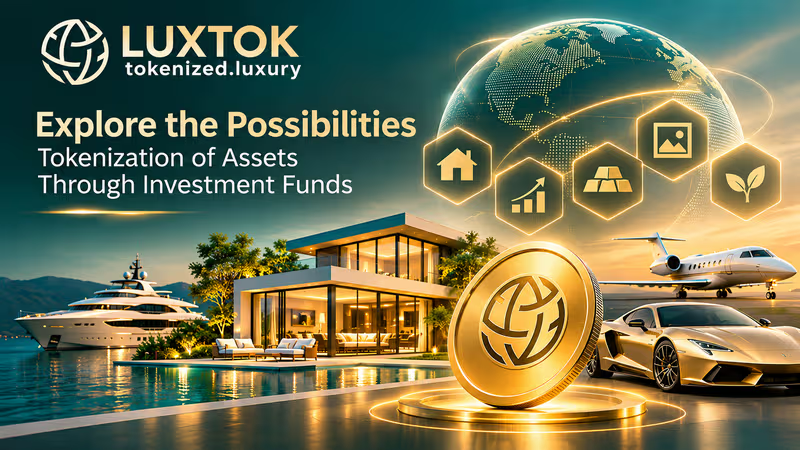
LUXTOK — Tokenized Luxury explores how blockchain technology could introduce new ways to document, manage, and participate in the world of high-value luxury assets.
The future of luxury may involve more than the products themselves. It may also include the digital infrastructure connecting these assets with their owners, collectors, and potential investors.
Beyond Traditional Luxury Ownership
Owning a luxury asset often involves substantial financial commitments, specialist services, and detailed documentation.
A yacht requires professional maintenance and operational management. A rare automobile needs verified provenance and appropriate storage. Exclusive real estate involves legal administration, insurance, and ongoing expenses.
Tokenization offers the possibility of representing certain ownership-related rights or economic interests through digital instruments.
This does not change the physical nature of the asset. Instead, it introduces potential new ways to organize the rights and records associated with it.
Exploring the World of Luxury Assets
Different luxury categories offer different opportunities for digital innovation.
Exclusive Real Estate
Prestigious villas, penthouses, private estates, and waterfront properties represent some of the most valuable segments of luxury real estate.
Appropriately structured digital tokens could represent defined economic interests connected to selected properties or property-owning entities.
Such models may introduce alternatives to conventional investment participation while preserving the legal and operational requirements of real estate ownership.
Luxury Automobiles
Rare sports cars, limited-production vehicles, and historic automobiles attract collectors who appreciate design, performance, and heritage.
Blockchain-based records could support documentation of provenance, ownership history, authenticity, and selected transactions.
Tokenization may also be explored for clearly defined economic interests associated with valuable collectible vehicles.
Yachts and Private Aircraft
Superyachts and private jets combine exclusivity with complex ownership and operating arrangements.
Digital systems could assist with administrative records and selected ownership-related structures.
Any fractional participation model would need to clearly distinguish between economic rights, actual ownership, operating responsibilities, and permission to use the asset.
Watches, Jewelry and Collectibles
Fine watches, rare jewelry, works of art, and collectible objects often derive their appeal from craftsmanship, condition, scarcity, and verified authenticity.
Digital asset records could support provenance verification and carefully structured transactions.
However, blockchain records cannot independently establish the authenticity or market value of a physical object.
How Tokenized Luxury Could Work
Consider a hypothetical collectible automobile with an estimated market value of €500,000.
A dedicated legal entity could hold the vehicle, while certain economic interests in that entity might be represented through 10,000 digital tokens.
Under this simplified illustration, each token would correspond to an initial modeled allocation of €50.
A participant holding 500 tokens would represent 5% of the token allocation.
That would not necessarily mean direct ownership of 5% of the automobile or the right to drive it.
The actual arrangement would need to define legal rights, custody, insurance, maintenance costs, financial obligations, and the procedures for any future sale.
This is an educational example, not an available LUXTOK investment offer or issued token.
Digital Provenance and Authenticity
In luxury markets, the history and authenticity of an asset can be almost as important as its appearance.
Collectors often require detailed documentation confirming an object's origin, previous ownership, condition, and authenticity.
Blockchain technology may provide tamper-evident records associated with verified documentation.
For example, a collectible watch could be linked to digital references recording its certification, service history, and ownership-related transactions.
Such records would still require trustworthy verification procedures and reliable links between the physical object and its digital identity.
Digital documentation complements specialist authentication rather than replacing it.
Fractional Participation and New Ownership Structures
Some premium assets are beyond the financial reach of most individual buyers.
Tokenization may support arrangements that divide specified economic interests into smaller digital units.
These structures could potentially create new participation models for eligible investors and collectors.
However, fractional participation is not the same as direct physical co-ownership.
The legal structure determines what participants actually receive, whether income or sale proceeds may be distributed, and which restrictions apply.
Liquidity should never be assumed. A digital token may be technically transferable without an active market of willing buyers.
Luxury Experiences and Digital Access
Not every luxury-related digital token needs to represent an investment.
Digital instruments may also be explored for membership programs, authenticated access privileges, event participation, or selected premium services.
For example, a luxury business might use secure digital credentials to manage access to an exclusive experience or verify membership status.
These models differ fundamentally from tokens representing financial interests.
Their practical value would depend on clearly defined benefits, reliable technology, and the services actually provided.
The Role of Blockchain in Luxury Markets
Blockchain technology can support selected functions involving digital records, traceability, verification, and authorized transactions.
Smart contracts may automate certain administrative processes where appropriate.
However, real-world luxury assets still require physical custody, expert valuation, insurance, specialist maintenance, and legal oversight.
Effective tokenization must connect digital infrastructure with these essential responsibilities.
Technology should support the luxury experience without introducing unnecessary complexity.
Challenges and Market Realities
Luxury assets do not automatically increase